
RESOURCES
Ha' Agua Water Tz'itz is a poetic video documentary created by YAKANAL youth and The Cultural Conservancy. The film features the Yucatec Mayan, Spanish, English, and Western Keres languages in poetic form. Through this film, we offer ha', agua, water, tz'itz—our gratitude, respect, apologies, and prayers. Through images, sounds, words, and stories, the film helps us feel more connected to one another and to the Indigenous roots that tie us to the lands we call home. By honoring and being reciprocal with water, we nourish the living connection that flows through us all. (Multilingual; TRT: 6 minutes).
VIDEOS
Abuela Luna is a video created by K'iche' Maya members of the Ki'kotemal Community in Quetzaltenango, Guatemala. Drawing from Indigenous Maya traditions, the video explains how Grandmother Moon influences life on Earth, including natural cycles, agriculture, and the spiritual connection between people and the environment. Through storytelling and cultural teachings, it encourages viewers to value ancestral knowledge, respect the natural world, and recognize the Moon as a symbol of continuity, balance, fertility, and the interdependence of all living things. (Spanish; TRT: 14 minutes).
BOOKS
Traditions of the Sun
The Sun-Earth connection from multiple perspectives at Chaco Canyon and the Yucatan
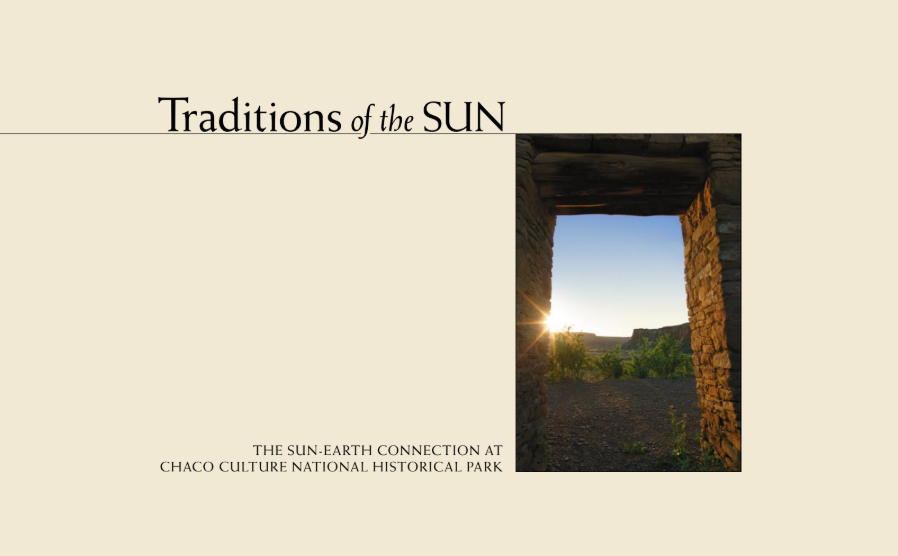
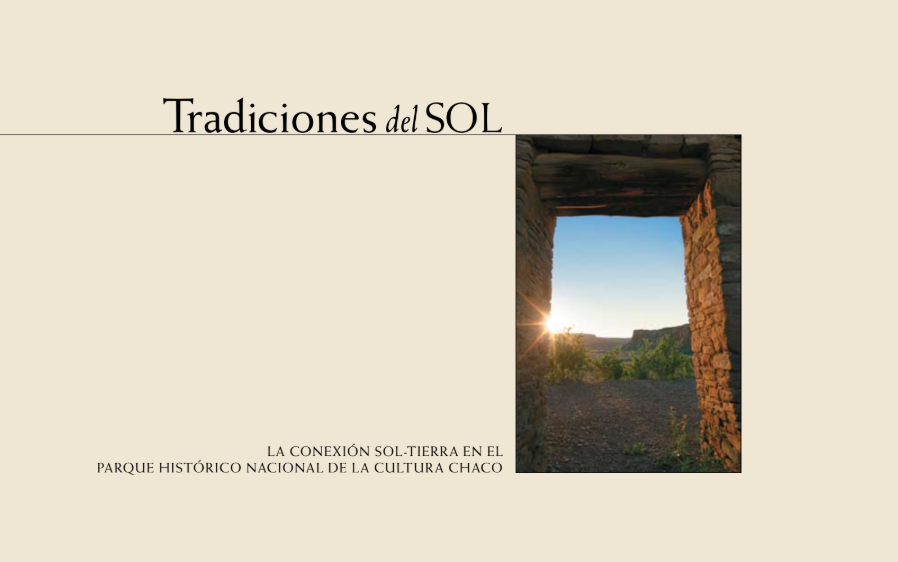
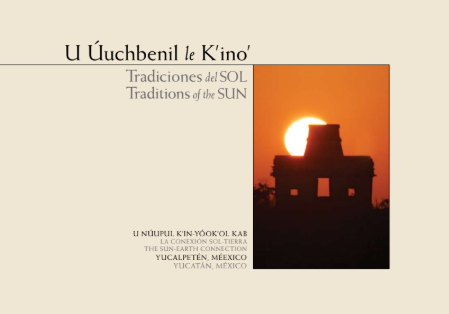
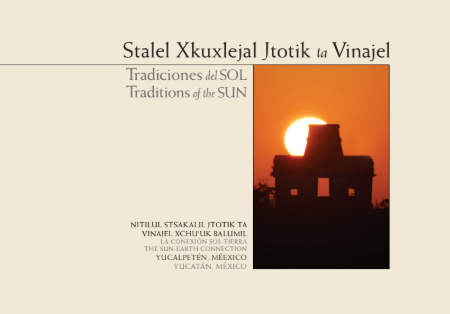
The Traditions of the Sun Chaco and Yucatan books explore the deep connections between Indigenous cultures and the Sun through the combined perspectives of traditional knowledge, observation-based cultural astronomy, and NASA solar science. The books highlight how the ancestors of the Pueblo peoples of New Mexico and the ancestors of the Maya communities of the Yucatan observed solar cycles, developed calendars, aligned monumental architecture, and incorporated the Sun into their ceremonies and daily lives.
The books were produced and developed through a collaboration among traditional knowledge holders from the Indigenous cultures represented, NASA’s Heliophysics Division, the University of California, Berkeley’s Space Sciences Laboratory, the National Park Service, Mexico’s National Institute of Anthropology and History, and Ideum. The Chaco books are available in English and Spanish, while the Yucatán books are multilingual, featuring Yucatec and Tsotsil Mayan languages alongside English and Spanish.
The mathematics, culture, and philosophy of maya numerals
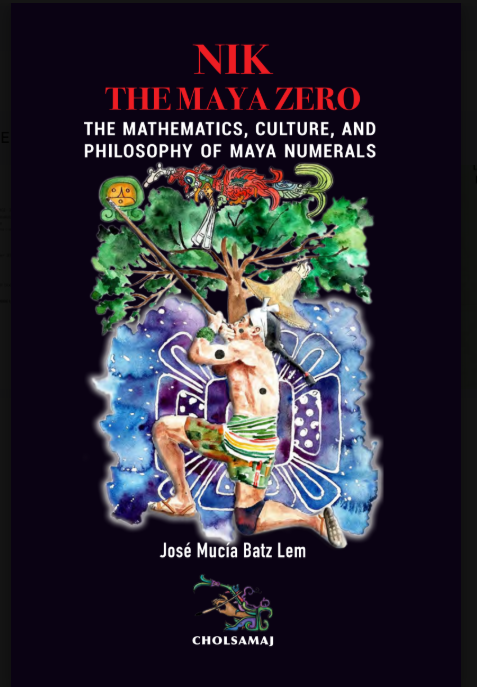
English
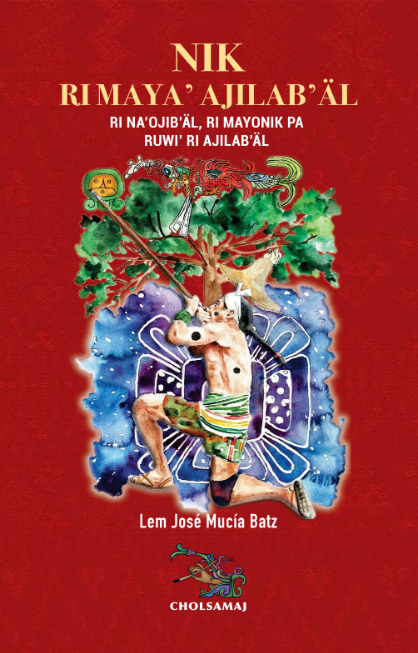
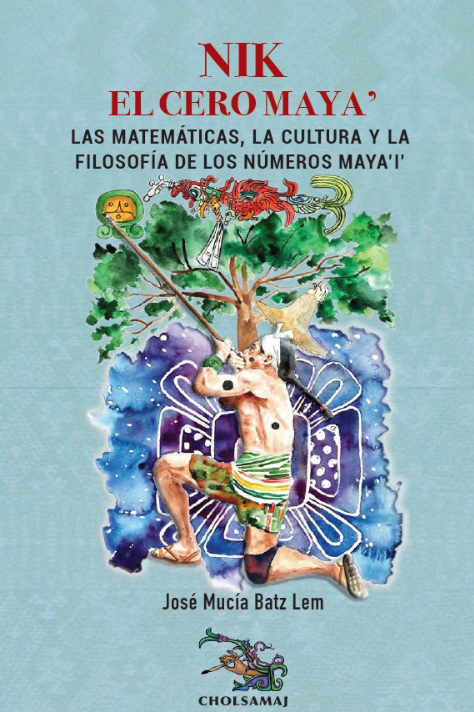
Nik: Maya Zero is an educational book that explores the Maya civilization’s groundbreaking understanding of mathematics, astronomy, and the concept of zero. Through engaging storytelling and illustrations, the books introduce readers to Maya knowledge systems and highlight the cultural and scientific achievements of the Maya people. The book is available in English, Spanish, and Kaqchikel Mayan, supporting broader access to Maya heritage and Indigenous language preservation.
This book was originally written in Spanish by José Mucía Batz Lem, a Maya Kaqchikel author from the town of Patzún, Guatemala, and a speaker of his Indigenous language. Through an in-kind collaboration among the University of San Francisco, the Exploratorium, Ki’kotemal School, the Popol Nah artists’ collaborative in New York City, the Guatemala-based Cholsamaj publisher, and YAKANAL, the book was updated and translated into English and Kaqchikel Mayan with the full participation of the author.
POEMS BY MAX EARLY
CLAY EXPRESSIONS
Hand down part of ourselves,
here on Niya Hotzee – Mother Earth.
Potter’s continuance,
journey with connective coil.
White epcha slip, damp
burnish like snow on clay.
Nourish our Pueblo people
with communal spoken thoughts.
Clay Woman matriarch
molds potter’s hands.
Stone expression
weathers time.
Our creativity blessing,
enduring tranquility.
Rise up fellow potters,
bestow this gift to our youth.
Instill your artistic passions
toward our precious children,
Amoot Ee-ahtra dem-me-sheh,
so this gift may never end.
Pueblo youth now,
generations forward,
may sustain the legacy,
our ancestors’ vision.
THE STONE SHAPED BY SONG
Only once, at dawn, I unearthed a grinding stone,
beneath a dirt floor at the old horse corral, she sang
ya ah-nah clan songs when there were those songs
in the field, now barren and bursting with tumbleweeds,
the land parched as potted polenta or peeled paint.
Her skin black lava. Her hair, shelled white corn.
Her body curved like a half moon crescent.
Her face rounded smooth has thinned from wear like sand
the oceans washed ashore in the rise and fall of tide,
a Hawaiian black sand beach, the flavour of Salt Woman,
red seaweed and slender green, heirloom seeds of corn
planted on a warm autumn day, sprouts then fades
like songs wither into stillness or bushes of sumac
berries in the abandoned field, red fruit the deer
devour, tart and tangy as hibiscus lemon tea.
A mist arises when the stone recalls the clan women’s voices.
Singing her songs, she remembers the rhythmic milling sounds
of mano and metate. She craves cornmeal and ground wheat.
She cherishes the last song sung to her. She hums
forgotten tones. I lift her up and say
“come home with me,
rest in Cusco’s garden.
Sing with me.”
DEER’S BREATH OF EVERY COLOR
Winter rises southeast—
Deer gnaw withered apples
as morning star fades
above indigo canyon.
Concealed in tall feathergrass
mountain lion nestles.
His tan body, mesmerized
like a stone fetish.
Sun blazes amber rays.
Snow powders the deer trail.
A hunter whispers through mist
his flowered prayer,
Muukai-tra Hush-tseh,
Meish guy-you, gumaa-tsinee,
Mountain Lion Man,
it’s already morning, help me.
Climbing Hawk Mountain
through blue juniper terrain
mountain lion leaps,
an arrow blest with pollen.
Winter sets southwest—
Deer in shadow tinged purple
enters spruce tree house
on his breath of every color.
DEER’S BREATH OF EVERY COLOR
POEMS BY MAX EARLY
CLAY EXPRESSIONS
Hand down part of ourselves,
here on Niya Hotzee – Mother Earth.
Potter’s continuance,
journey with connective coil.
White epcha slip, damp
burnish like snow on clay.
Nourish our Pueblo people
with communal spoken thoughts.
Clay Woman matriarch
molds potter’s hands.
Stone expression
weathers time.
Our creativity blessing,
enduring tranquility.
Rise up fellow potters,
bestow this gift to our youth.
Instill your artistic passions
toward our precious children,
Amoot Ee-ahtra dem-me-sheh,
so this gift may never end.
Pueblo youth now,
generations forward,
may sustain the legacy,
our ancestors’ vision.
THE STONE SHAPED BY SONG
Only once, at dawn, I unearthed a grinding stone,
beneath a dirt floor at the old horse corral, she sang
ya ah-nah clan songs when there were those songs
in the field, now barren and bursting with tumbleweeds,
the land parched as potted polenta or peeled paint.
Her skin black lava. Her hair, shelled white corn.
Her body curved like a half moon crescent.
Her face rounded smooth has thinned from wear like sand
the oceans washed ashore in the rise and fall of tide,
a Hawaiian black sand beach, the flavour of Salt Woman,
red seaweed and slender green, heirloom seeds of corn
planted on a warm autumn day, sprouts then fades
like songs wither into stillness or bushes of sumac
berries in the abandoned field, red fruit the deer
devour, tart and tangy as hibiscus lemon tea.
A mist arises when the stone recalls the clan women’s voices.
Singing her songs, she remembers the rhythmic milling sounds
of mano and metate. She craves cornmeal and ground wheat.
She cherishes the last song sung to her. She hums
forgotten tones. I lift her up and say
“come home with me,
rest in Cusco’s garden.
Sing with me.”
DEER’S BREATH OF EVERY COLOR
Winter rises southeast—
Deer gnaw withered apples
as morning star fades
above indigo canyon.
Concealed in tall feathergrass
mountain lion nestles.
His tan body, mesmerized
like a stone fetish.
Sun blazes amber rays.
Snow powders the deer trail.
A hunter whispers through mist
his flowered prayer,
Muukai-tra Hush-tseh,
Meish guy-you, gumaa-tsinee,
Mountain Lion Man,
it’s already morning, help me.
Climbing Hawk Mountain
through blue juniper terrain
mountain lion leaps,
an arrow blest with pollen.
Winter sets southwest—
Deer in shadow tinged purple
enters spruce tree house
on his breath of every color.
FEASIBILITY STUDY
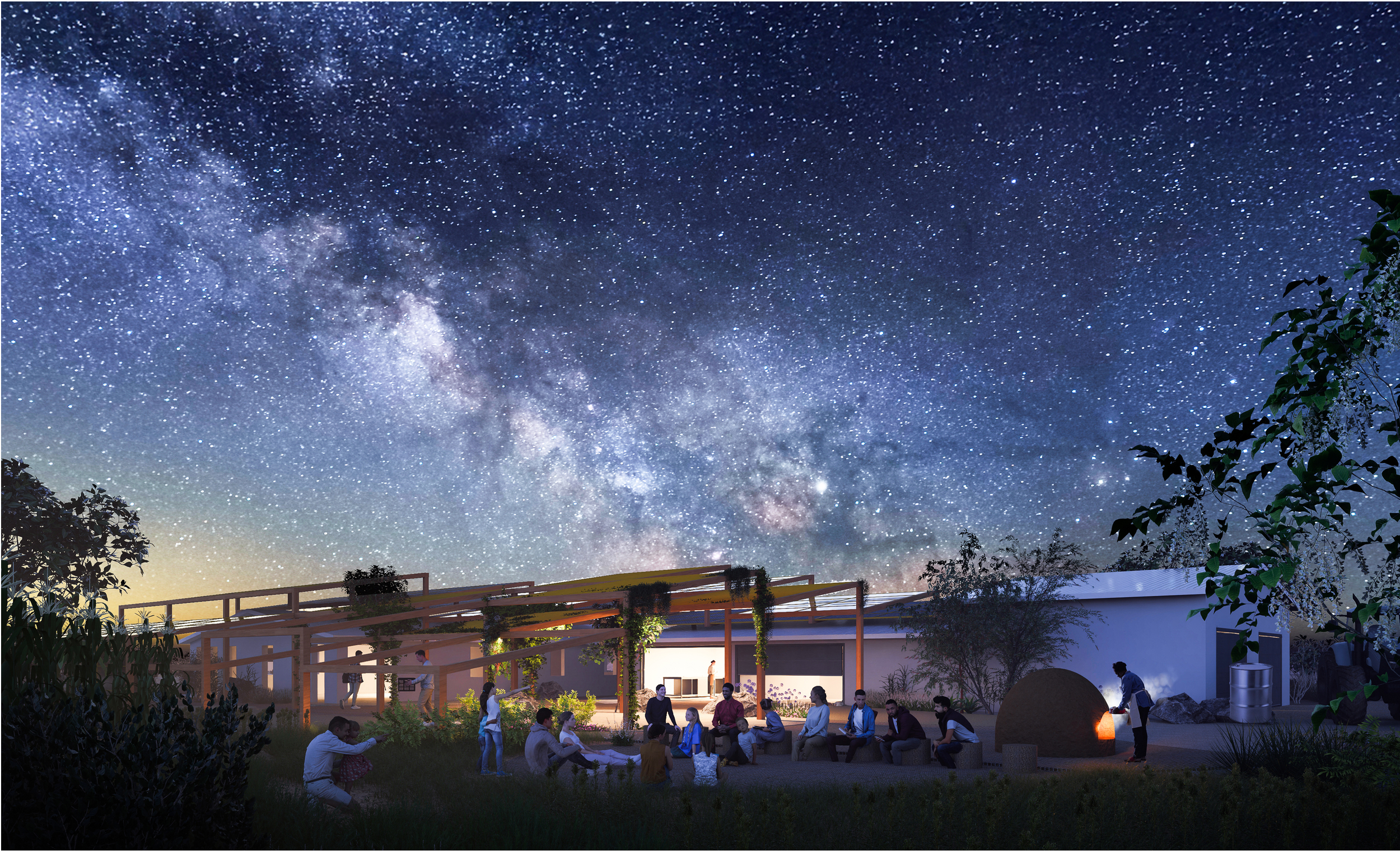
YAKANAL's long-term vision for supporting Indigenous leadership and self-determination at Laguna Pueblo, New Mexico, includes establishing the YAKANAL Native Foods Center and Laguna Learning Hub after more than fifteen years of operating without dedicated facilities. This envisioned permanent infrastructure will sustainably support YAKANAL's food sovereignty, cultural education, and leadership programs. A recently completed YAKANAL Native Foods Center and Laguna Learning Hub Feasibility Study explored the potential for developing these future centers. The study examined how renovated existing buildings could support food processing, seed preservation, cultural learning, and intergenerational knowledge exchange, providing a roadmap for realizing YAKANAL's vision.
The Study was led by MASS Design Group and was funded by the McCune Charitable Foundation under fiscal sponsorship by the New Mexico Community Foundation. Other key partners in the Study included the Laguna Pueblo-based Southwest Business Development Consultants and Data Management of New Mexico who conducted a comprehensive community survey to assess needs and possibilities. The study evaluated the operational, financial, and organizational feasibility of the proposed centers, including renovation options, governance, programming, and long-term sustainability. The study provides a community-driven framework for sustainable facilities, operations, and long-term impact at Laguna Pueblo.
FOOD SOVEREIGNTY ASSESSTMENT RESULTS
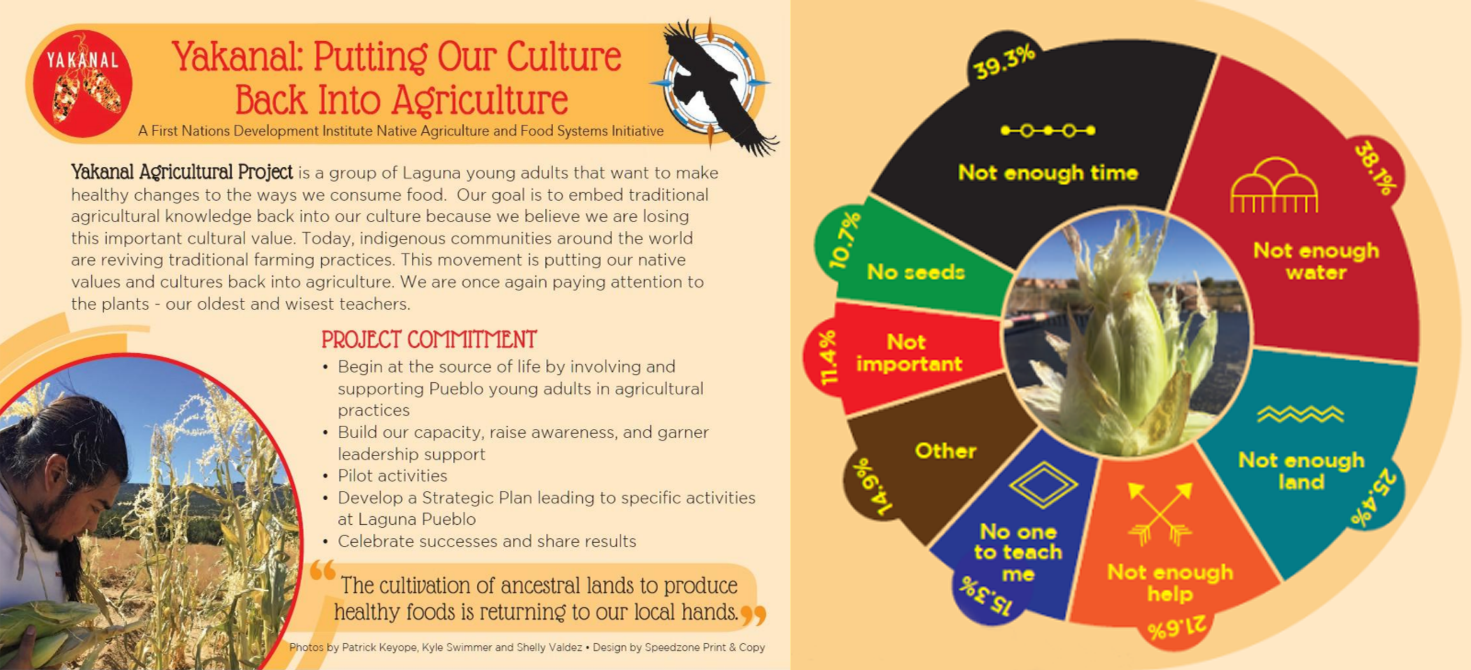
Funded by the First Nations Development Institute’s Native Agriculture and Food Systems Initiative, YAKANAL conducted a Food Sovereignty Assessment at Laguna Pueblo in 2017–2018. The assessment focused on revitalizing traditional farming practices by engaging youth and increasing community awareness of the cultural importance of food, land, water, and native food systems. The project supported agricultural activities, community education, strategic planning, and pilot initiatives across Laguna’s six villages. The infographics summarize the results of the assessment.